Precision Aluminum Alloy Die Casting Services

Are you considering a cost-effective aluminum die casting project? Working with Junying Metal Manufacturing Co., Ltd – a specialty aluminum die casting supplier is the right choice.

With over 15 years of experience in high-quality yet low-cost metal casting and mold making, Junying is capable of bringing your aluminum die casting design to life while maintaining competitive pricing, innovative design, and quality assurance. Our advanced manufacturing equipment ensures the production of high-quality aluminum and zinc die casting parts with short delivery times.

  • ISO 9001:2015 Certified Die Casting Manufacturer
  • High Precision & Tight Tolerances
  • Fast Turnaround & Competitive Pricing
  • Custom OEM & ODM Die Casting Solutions
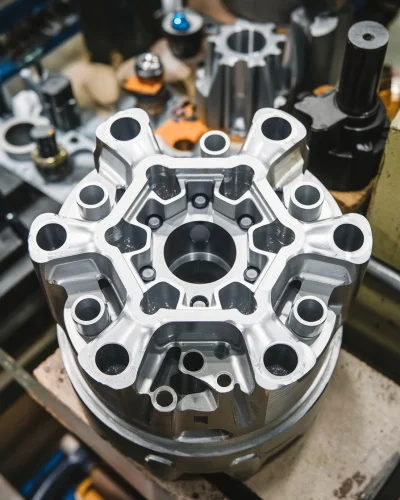
Precision Aluminum Die Casting

Why Choose Junying Aluminum Die Casting Services?

  • ISO Certification: We are an ISO 9001:2015 certified aluminum die casting factory, specializing in mold making and precision alloy die casting.
  • Strict Quality Control: Advanced inspection techniques ensure every aluminum alloy part meets exact specifications.
  • Wide Industry Applications:Our custom aluminum casting solutions serve industries including automotive, electronics, defense, marine, lighting, furniture, and medical equipment.
  • State-of-the-Art Facilities:Our modern aluminum casting factory is equipped with high-tech die casting machinery and precision measuring instruments to ensure high efficiency and accuracy.
  • OEM & Custom Solutions: Need to buy custom aluminum die casting parts? We provide OEM aluminum die casting services, capable of producing complex aluminum castings with specific configurations and finishes.
  • High-Productivity & Cost-Effective Solutions:Thanks to our reliable raw material supply chain and skilled workforce, we manufacture aluminum die casting parts and components with high efficiency and cost savings, ensuring lower prices compared to other manufacturers.

Capabilities of Junying Aluminum Die Casting Services

As a leading aluminum casting company, Junying constantly improves its manufacturing processes. Our plant is equipped with top-line machinery and advanced technologies to ensure superior quality and efficiency.

Products aluminum cable clamps, cable clips, OEM aluminum die casting parts
Materials aluminum alloys 360.0, 380.0, ADC2, ENAC-44300, etc.
Technologies hot chamber die casting, high pressure die casting
Finishes Sand Blasting, Polishing, Spray painting, Pad Printing, Colour Electrophoresis, Mirror Finishing, Silk-Screen Printing, Oxidation
Sizes up to 30cm x 30cm
Machine up to 300 tons
Industries Served Electronics, Defence, Communications, Medical, Marine, Lighting, Furniture, High Security Locks and General Engineering

What is Aluminum Die Casting?

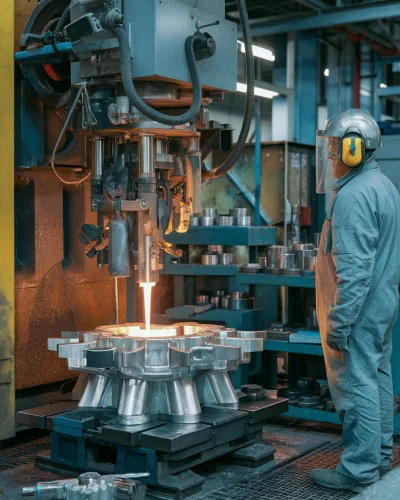
Aluminum die casting is a precision metal casting process where molten aluminum alloy is forced under high pressure into a steel mold cavity. The die casting mold is made from hardened steel dies, which are machined into the desired shape.

This high-precision die casting process allows for the mass production of complex aluminum components with high dimensional accuracy, making it ideal for industries requiring durable and lightweight metal parts.

Advantages of Aluminum Die Casting:

  • High Strength & Lightweight -Aluminum castings offer excellent strength-to-weight ratio, making them suitable for automotive and aerospace applications.

  • Superior Surface Finish -Aluminum die cast parts have smooth surfaces, reducing the need for additional post-processing.

  • Excellent Corrosion Resistance -Aluminum alloys are naturally oxidation-resistant, ensuring long-lasting durability.

  • High Production Efficiency -Automated die casting machines allow fast production cycles, reducing manufacturing costs.

How Does Aluminum Die Casting Work?

The aluminum die casting process involves several key steps:

  1. Mold Preparation & Design:Engineers design a precision aluminum die casting mold, ensuring it meets the required shape, dimensions, and tolerances. The mold is made of hardened steel and consists of two halves: a movable half and a stationary half.Molten Aluminum Injection – High-pressure die casting machines inject molten aluminum alloy into the mold cavity.
  2. Melting & Injection:Aluminum alloy is melted at high temperatures (typically 660°C / 1220°F). The molten aluminum is injected into the mold cavity under high pressure (1500-2500 psi) to ensure fine details and high precision.
  3. Solidification & Cooling:The molten aluminum quickly solidifies within seconds, taking the exact shape of the mold. Cooling time depends on part thickness and complexity.
  4. Ejection & Trimming:The solidified aluminum casting is ejected from the mold, and excess materials (flash, sprues, runners) are removed. Trimming, deburring, and CNC machining may be applied for final precision finishing.
  5. Surface Treatment & Quality Inspection:Additional surface finishes such as powder coating, anodizing, polishing, or sandblasting are applied for enhanced durability and aesthetics. Final quality control inspections ensure that each aluminum die casting part meets industry standards and customer specifications.This efficient and repeatable process makes aluminum die casting an excellent choice for high-volume production of precision-engineered metal parts.
Precision Aluminum Die Casting

Aluminum Alloys Used in Die Casting

Choosing the right aluminum alloy is important for achieving optimal strength, weight, and corrosion resistance. At Junying, we work with a wide range of aluminum alloys, including:

  • A360.0: Excellent corrosion resistance and high-pressure tightness.
  • A380.0: The most commonly used alloy for automotive and industrial applications.
  • ADC12: Superior wear resistance and machinability.
  • EN AC-44300: High thermal conductivity and structural integrity.

Each alloy is carefully selected based on application requirements, ensuring maximum performance and durability.

Applications of Aluminum Die Casting

Our custom aluminum die casting components are widely used across industries, including:

  • Automotive Industry: Engine blocks, transmission housings, brake calipers, cylinder heads.
  • Electronics & Telecommunications: Heat sinks, enclosures, connectors, LED housings.
  • Defense & Aerospace: Structural components, lightweight aluminum casings, drone parts.
  • Lighting & LED Fixtures: Durable aluminum housings for outdoor and industrial lighting.
  • Medical Equipment: Precision aluminum parts for diagnostic devices and surgical tools.
  • Industrial Machinery & Marine Equipment: Corrosion-resistant aluminum components for heavy-duty applications.

Customer Case Studies & Success Stories

Case Study 1: High-Precision Aluminum Lock Parts for Security Industry

A leading security company required custom aluminum die-cast lock parts with tight tolerances and high durability.

  • Solution: Used ADC2 aluminum alloy, precision CNC machining, and mirror finishing.
  • Result: Successfully produced 10,000+ units with zero defects, reducing costs by 15%.

Case Study 2: Lightweight & Durable LED Lamp Housings for Automotive Industry

A European automotive lighting company needed lightweight yet strong aluminum die-cast housings.

  • Solution: Utilized high-pressure die casting and color electrophoresis finishing.
  • Result: Improved product longevity and corrosion resistance, leading to a 30% increase in durability.


FAQ
1. How Do I Choose the Right Aluminum Alloy for My Project?

The choice of aluminum alloy depends on the mechanical properties required, including strength, hardness, and wear resistance, as well as corrosion resistance needs. Weight considerations and machining and finishing requirements should also be evaluated. Junying’s engineering team can help select the best alloy for your specific application.

2. What Surface Finishes Are Available for Aluminum Die Casting Parts?

Common surface finishes for aluminum die casting parts include polishing, sand blasting, oxidation, and color electrophoresis. Polishing creates a smooth and shiny finish, while sand blasting produces a uniform matte texture. Oxidation increases corrosion resistance, and color electrophoresis enhances the appearance of aluminum die casting components.

3. What Industries Benefit from Aluminum Die Casting?

Aluminum die casting serves a wide range of industries that require lightweight and durable metal components. Common applications can be found in the automotive, electronics, medical, marine, security, and lighting industries. Its versatility makes it suitable for manufacturing various precision components and custom parts across these sectors.

4. How Much Does Aluminum Die Casting Cost?

The cost of aluminum die casting depends on part complexity and size, material selection, production volume, surface finishing, and secondary machining requirements. Higher production quantities generally reduce the cost per unit. Junying provides aluminum casting parts to global customers while maintaining quality. Contact us with your project details for an accurate quote.

5. What Is the Difference Between Aluminum Die Casting and Zinc Die Casting?

Aluminum and zinc die casting differ in material properties, melting points, durability, and applications. Aluminum is lighter and has a higher melting point of approximately 660°C, while zinc melts at around 419°C and offers greater ductility. Zinc castings generally provide longer mold life, while aluminum is commonly used in automotive and aerospace applications.

6. What Is the Minimum and Maximum Size of Aluminum Die Casting Parts?

Aluminum die casting can produce components ranging from a few grams to several kilograms. Small precision parts typically measure 1–10 cm, while medium-sized components may measure 10–50 cm. Larger castings can reach up to 100 cm, although they may require multi-cavity molds or secondary assembly depending on their design.

7. How Long Does an Aluminum Die Casting Mold Last?

A high-quality aluminum die casting mold typically lasts between 50,000 and 500,000 shots. Its service life depends on several factors, including mold material, operating temperature, injection pressure, and cooling system design. Using hardened tool steel, along with proper lubrication and regular maintenance, can help extend mold life.